Friday, April 21, 2017

Fingersmith - Sarah Waters


"That bitch knew everything. She had been in on it from the start."


This novel starts off as a fairly Dickensian historical piece.  Set in 19th century London among a loose knit family of thieves with the requisite odd names to go with it.  The man of the house is a Mr Ibbs, who spends much of his time melting gold off of coins, just a little so as to not lose the value of the coin, but enough to acquire a bit of gold .  The lady of the house Mrs. Sucksby, runs a quasi adoption agency, taking in babies of local prostitutes and other shamed girls, and then selling the babies for a profit (after keeping them quiet in their cribs with nips of rum).  One of the few older girls there is Sue Tinder (names does mean something), who has always received better attention from Mrs Sucksby.  Sue does occasionally participate in some of the less noble activities there -she learns how to make keys for one,  but in general is kept out of things.  This changes with the arrival of Gentleman, a family acquaintance who has an idea for a wonderful swindle that requires Sue to join in. 


I'm loathe to give much of the plot here, other than to say it is incredibly complex and has a tendency to fold back on itself multiple times.  Its not too much to say that this is a mystery, and a lesbian romance (I think pretty much every Sarah Waters' book is).  There is a weird old guy who is cataloging literary porn because....someone has to do it(?), a girl, Maud Lilly, who has been raised incredibly cloistered except for one small, nah, huge, exception, and a lot of skullduggery concerning who exactly people are.  And an insane asylum, and a knife, a playing card...


One of the great things about this book is the way it does the unexpected - in some novels this comes at the expense of misleading the reader - but that's not the case here - you are put in the same seat, with the same knowledge as some of the characters, and things aren't always what they seem to them.  Vertigo essentially employed this same process, and that turned out well.  In Fingersmith, this is even added to by not having everything revealed at once.  We think we are done with the surprises, but more keep coming.  There is a labyrinthine scheme going on here that is not the one you think, even a few pages from the end.  And characters who can be exceedingly good while at the same time exceedingly bad.


I suppose, too, this is about family.  While we don't have families in the traditional sense here - the two main characters have never known either of their parents or immediate family members, and there isn't a single normal parent-child relationship in the book, the allegiances, and responsibilities, are the same and play an important role in what goes on. More importantly, we get to see what happens when the foundations of families prove to be in one way an illusion, but remain steadfast in other ways.

Friday, December 16, 2016

Underground - Haruki Murakami


One of two, as far as I know, nonfiction books by Murakami (I believe he has something relatively new with Seiji Ozawa on music, so maybe three).  In 1995, the religious cult Aum Shinrikyo executed  five simultaneous attacks on the Tokyo subway system by releasing the chemical weapon sarin gas.  12 people were killed, approximately 50 people were severely injured, and up to 5000 people had at least temporary symptoms. Murakami's interest was in the victims and this book includes his interviews with a variety of survivors and relatives of some non-survivors.  The second half of the book includes his interviews with a few Aum members (none of whom were directly involved in, or had prior knowledge of the attack).


Murakami has built a career in writing novels that are often quite critical of Japanese society and its rigid structure of a strict work ethic and a need to conform.  This book expands on that - one of the striking things is the consistent trend of the subway victims to desperately try to get to work (or stay on the job in the case of the subway workers) even as they were experiencing symptoms and passing by people who had collapsed (this happened during the morning rush hour).  I suspect this was at least partially due to the incomprehension that a chemical weapon attack was actually happening (selected members of the group pierced bags of liquid sarin hidden in newspapers on the trains, so there were no obvious signs that anything was wrong until people began to become ill), but the sense of duty these people felt to their employers is strongly apparent in the interviews.  While a few professed anger at Aum members, many others seemed more intent on just putting this in the past and moving on with their lives. 
The interviews with the Aum members are also striking.  By the time of the interviews, many had left the group (which still exists to this day), but nearly all had positive things to say about it.  Murakami suggests that Aum, which required its followers to renounce their past lives and give up everything to become a member, gave these people a means of feeling a part of a group, something that they were lacking, as most of them were outsiders in some way prior to joining.  He sees a parallel between Aum and Japanese society in that both required people to give up a good part of their self in order to become a member of that group.  Aum members typically weren't willing to give up that part of their self to fit into typical Japanese society, so they turned to Aum as an alternative.  While Murakami sees how this ultimately led to the horror of the subway attack, he also sees that for many of the Aum members, they were able to benefit from Aum.  All his interviewees had difficulty when he asked them if they would have carried out the attack if asked.  Most said no, but they all seemed to realize the ambiguities of the situation they had become involved in.
Like all of Murakami's books, well worth reading.

Friday, September 16, 2016

World's End - T. Coraghessan Boyle


Plot:  The Dutch settle upstate New York, much to the consternation of the natives.  Over three centuries, not much changes.


Why read it:  Boyle apparently grew up here and knows the area and the people well.  When I first read this years ago, I was least impressed with the section set in the 1940's.  Now that I now know more of the history of the Peekskill riots and the associated history, that section of the book seems completely different to me now, and is one of the highlights. And there are ghosts, both the ancestral kind and the literary kind, as in Washington Irving and perhaps Melville.  Boyle is at a minimum, an interesting writer, and here, he's a great writer.  I can also vouch for Drop City.


A grand, centuries hopping tale of three families in the Hudson River Valley.  A novel of place, of fate, of being tied to the land, and what happens when you lose those things.   Boyle focuses on the Van Warts and Van Brunts, Dutch settlers to the New York are in the 1600's.  We met their ancestors in both the 1940's and 1960's.  Things haven't really changed much.  In some cases, not even the names, but the important thing is the Warts are still doing it to the Van Brunts.


A lot of the fun (although in a somewhat dark way) is in seeing history repeat itself time and time again, even as some of the characters are aware of that possibility and it still happens to them.  Only one character seems to have the ability to shake this, and his solution is to literally go to the world's end.  There's a character who is not very nice and has a habit of eating dirt, but you understand why he eats dirt after a while, and it makes sense; at least it did to me.  It didn't make him more sympathetic, but gave insight into why his family was where it was.


Another book that fortunately has a list of all the characters, as there are a lot.  And it is a book that you can argue with, but in a good way.  Is fate really that big of an influence over our lives?  That certainly is the tack the novel takes.  But it also seems to make the argument that we can overprescribe fate, and merely do things that seem to reinforce fate - in a "this is going to happen anyway, so why not?" mode. 

Tuesday, September 13, 2016

A Brief History of Seven Killings - Marlon James


“People stupid. The dream didn't leave, people just don't know a nightmare when they right in the middle of one.”  


Plot:  A not so brief story about more than seven killings.  Beginning in mid 70's Jamaica just prior to the Smile Jamaica concert, and winding through the 80's and early 1990's, and New York, and as told by a multitude of narrators, the complex and violent world of Jamaican politics, injustice and struggle for a better life.


Why read it: A challenge to read - many of the characters use Jamaican patois, so just figuring out what they are saying can be challenge, especially early on, and its a complex story that, other than a brief introductory chapter by a ghost to help orient you a little, doesn't provide much in the way of explanation as you are sifting through chapters narrated by seemingly unconnected people.  But it all coalesces together pretty soon and you are left totally immersed in a constantly shifting   but always engrossing story.


I saw The Harder They Come many, many years ago and was eternally grateful for subtitles.  Still, I found it a bit ironic to be watching a movie that was more or less in English needing this to be understood.  In reality, the subtitles weren't needed; what was gained in understanding by having them was canceled out by the loss of trying to overlay English on Jamaican tongues.   Which is not totally unrelated to the point of A Brief History.  Other than quickly looking up bombacloth, or one of the many variants that seem to appear multiple times on every page, I just struggled through for a few chapters until I felt confident of what I was reading.  More important was deciphering motivation and allegiances, which were often clouded, unsurprising in a book that has CIA operatives and Bay of Pigs veterans hanging around on its edges.
The Singer, as he is referred to here, hangs over the book, while he barely appears in it.  He is the fulcrum for the main event that everything leads to and then moves from.  However, like the Singer himself, who was not easy to define, and came to represent a country in which he was part of a fringe minority that  managed to scare all the wrong people.  The threat they represented was different to different people - to the CIA it was communism, to the gangs that ruled much of Kingston, it was a threat to their power, and oddly it seems, to their identity.
In moving from the 70's to the 90's, we pass through a few generations of Jamaicans.  Up to the late 1970's, the gangs in Kingston seem happy with just local ambitions, notably in the character Papa-Lo, the leader of one of the gangs.  In a bit of a recurring theme, Papa-Lo uses people's consistency in underestimating him to his advantage, until Papa-Lo underestimates his own second, Josey Wales.  Wales is the most memorable character in the book, a violent man, but one with a very sharp mind.  Wales expands the groups reach into the US in the 80's through distribution of crack.  Ultimately, though, Wales is brought down by his own parochialness, not being aware of the political repercussions his business causes in the US.  That, and like Papa-Lo, having an underling who may be underestimated himself.


A violent book - Jamaica is not just the land of reggae and beaches.  And parts of New York in the 80's and 90's wasn't much better.

Tuesday, August 30, 2016

Evidence of Things Unseen - Marianne Wiggins


"People lean, either in their dreams or in their actions, toward that place where they suspect their inner lights are coming from. Whether they call it God or conscience or the manual of Army protocol, people sublime toward where their inner fire burns, and given enough fuel for thought and a level playing field to dream on, anyone can leave a fingerprint on the blank of history."
Plot: Nice guy amateur scientist gives his wife (and himself) cancer.  America enters enters the atomic age.  Is it progress?
Why read it: Few novels are able to give such a complete feel of everyday life in the early 20th century as this does.  I was particularly impressed with the road trips Fos (and sometimes Opal) takes early on;  these were real adventures back then, given the newness of automobiles, the lack of highways and the attached conveniences. 


After reading three of Marianne Wiggin's novels, it suddenly occurred to me that they all take place in the early 20th century.  I'm not sure if that's an important point or not. beyond this, they don't have a lot in common other than protagonists who are just slightly outside the mainstream of life, attempting to fit in the way they can rather than just breaking away completely.


Evidence of Things Unseen is about light.  Fos (Ray Foster), trained as a candle maker, then shipped off to WWI and ends up making flares so the men in the trenches can "see death coming." He parlays that into a job at a photography studio with his war buddy, the heavy drinking, womanizing, rich Flash (real name Chance) back in Tenessee.  Fos is fascinated by the natural light of the world, whether from the nighttime sky, or bioluminesncence, or wherever else he can find it.  On an annual trip to see the sky in Kitty Hawk, Fos' car breaks down (the human made world will on occasion fail us) he meets Opal, a young woman he quickly falls in love with.  They get married, working at the studio in Tennessee and using  Fos' homemade x-ray machine at local fairs to show the bones in Opal's feet.


Their story will move through the next few decades of America with everything that implies.  Symbolism is heavy in this book, form the character's names to the wooden whales that appear often.  Flash will figure prominently in the roaring 20's as one would assume.  The depression takes over soon after, until that leads to the coming of war and a new age for America.  The writing is wonderful, lyrical and vividly describes life in a different, slower America of the time.


Look closely and you can get glimpses of Melville, Fitzgerald, and Steinbeck running through the book. 


Monday, August 15, 2016

The Goldfinch - Donna Tartt

“—if a painting really works down in your heart and changes the way you see, and think, and feel, you don’t think, ‘oh, I love this picture because it’s universal.’ ‘I love this painting because it speaks to all mankind.’ That’s not the reason anyone loves a piece of art. It’s a secret whisper from an alleyway. Psst, you. Hey kid. Yes you.”


Plot: Thirteen year old Theo Decker and his mother are two victims of a terrorist attack on a museum in New York.  His mother is killed, but Theo is one of the few survivors. In the immediate aftermath of the explosion, he comes into possession of an old ring and the 1654 masterpiece by Fabritius. As his father has disappeared, Theo is taken in by a friend's wealthy family.  Just as he is getting accustomed to living there, his father reappears and takes Theo to a new home in Las Vegas.  There, Theo lives a mostly unsupervised life along with his new friend Boris.  The following months of alcohol and drug abuse end only when Theo's father, facing loans he can't repay, kills himself.  Theo ends up back in New York, living with the partner of the man who gave him the ring in the museum. 
Eventually a grown up Theo gets involved in a complicated and dangerous scheme to recover his painting.


Why read it:  This is a powerful book on the nature of art, identity, growing up and, I would say, learning to like yourself.  Tartt has populated with a range of memorable characters - I thought Mrs. Barbour and Xandra were particularly well done, and everyone seems to enjoy Boris.  Theo, the main character, was a bit of a problem for me, being almost a bit sketchy, but I think that may be on purpose, as Theo has a hard time ever defining himself for 700 odd pages.


In my reading of this book, there are two parallel narratives - that of Theo and that of the painting.  For Theo, the painting is far and away his most precious asset, surpassing that of his own well-being.


One of the most distinct impressions I have of this book is how the main character, Theo, never really grows up, at least not until the very last few pages.  It is apparent at the start, when he is 13, that he already has a few bad habits, and they increase in severity over the years.  Theo does suffer from PTSD, for which he gets almost zero help, and this is a major factor in his abuse of drugs and alcohol, as well as his inability to form close relationships.  The relationship he has with Hobie was of particular interest to me.  Theo obviously thinks the world of Hobie, as his home is essentially his one refuge from the madness of the rest of the world.  But Hobie never really does anything proactive to help Theo - it is never made quite clear how aware Hobie is of Theo's problems, other than he seems to know more than he lets on about his personal issues.  Then again, Hobie seems completely floored that Theo has been selling antique forgeries out of their shop for a long period in order to get them out of financial ruin.  In a way, that is the nature of their relationship; they are close because Hobie doesn't pry.  Much as Theo's relationship with Kitsey is based on her ability to skim along in life and never delve into the weeds too much on emotional topics. 


Then there is Boris.  Everything gets more kinetic when he is involved. Hyperactive and perpetually alcohol or drug fueled, Boris operates at one speed.  Neither Theo nor the reader is really sure of how true most anything that comes out of his mouth is, but he does act as Theo's best and most trusted friend.  After finishing the book, I still wasn't sure of much of anything about Boris - what he actually did for a living, who he was in a relationship with, whether he actually had kids or not, and so on.   There's a bit of a subtext about his relationship with Theo that never gets resolved either, and given Theo's apparent blackouts, there's a lot of room to fill in whatever blanks you want.


I did enjoy reading this book - I think some of its flaws may be somewhat intentional.  Life doesn't always give answers, nor is it often that enjoyable, yet there is a lot to be said for it. 

Monday, August 8, 2016

The Thousand Autumns of Jacob de Zoet - David Mitchell


“If only human beings were not
masks behind masks behind masks.

If only this world was
a clean board of lines and intersections.

If only time was
a sequence of considered moves
and not a chaos of slippages and blunders.”

Plot: A young employee of the Dutch East India Company comes to 9th century Japan to inspect the financial records of the company there.  Foreigners are restricted to a small man made island, but Jacob de Zoet is interested in what lies beyond.  He becomes infatuated with a Japanese woman he briefly observes while she makes a visit to the island.  Determined to meet her, de Zoet eventually does get to go to the mainland for a short time.  The woman, Orito, is sold off by her father to a strange cult in the distant mountains.  de Zoet devises a plan to rescue her while relations between the Dutch and Japanese falter and the threat of war develops.

Why read it:  Mitchell is meticulous in his detail and is a master at exploring the mind and though processes of his characters.  This book is impressionistic and reads at times almost like poetry.  The characters are having to communicate in languages they have only a basic grasp of, yet they often have an ability to communicate on what seems to be a completely different plane of thought. 


David Mitchell can write some fairly challenging stuff.  The majority of his novels shift around it time and space and it takes a lot of work sometimes to figure out what is going on.  Ghostwritten, Cloud Atlas and No 9 Dream were that way.  I enjoyed all of them, particularly Ghostwritten, but none would rank as a personal favorite.  I'll eventually get around to writing about Black Swan Green, which is a personal favorite, and a big departure for Mitchell - I think you could easily classify it as YA.


Jacob de Zoet is a historical novel set in Japan of the 19th century, a time when it was still closed off almost completely to outside influence. The Dutch East India Company is allowed to trade with the Japanese, but are restricted to a small island, Dejima, from which to conduct all their business.  Interactions with most Japanese, other than those who work on the island, is prohibited.  This applies especially to women.  However, one Japanese woman, Orito, a midwife, is allowed to come to Dejima as the student of the Company's doctor.  Jacob de Zoet, a clerk for the company, who has been sent to Japan to investigate the financial books (which no one there really wants him to do), is infatuated with her despite her partially disfigured face. Jacob, honest to a fault, and Orito are soon entangled in a complicated web of personal and international relations.  Orito disappears, and ends up in a strange mountain temple, sold into a strange cult.  At the same time, political events are leading to a potential battle in Dejima.


While this all the elements of a fairly straightforward novel, with Mitchell that is not going to happen.  He is a superb writer, able to focus on all that is not readily apparent until he points it out. Maybe what made this book work for me was that Mitchell stays with a fairly straightforward story here, as opposed to his more freeform other works, but still uses his remarkable ability to write in an almost surrealistic manner; the two work together to give the characters remarkable depth, but I didn't get lost like I sometimes do in his work. Here, while Mitchell describes the Japan of that period very well, it still remains a mystery, much like it does to de Zoet, who despite being in Japan, is not ever really there, or able to decipher what is going on.

Wednesday, August 3, 2016

Sacred Hunger - Barry Unsworth


“Money is sacred as everyone knows... So then must be the hunger for it and the means we use to obtain it. Once a man is in debt he becomes a flesh and blood form of money, a walking investment. You can do what you like with him, you can work him to death or you can sell him. This cannot be called cruelty or greed because we are seeking only to recover our investment and that is a sacred duty.”  

Plot:  Matthew Paris takes a job as a slave ship's physician.  Silently outraged at the treatment of the crew, many of which were essentially kidnapped to serve on the ship, Paris' anger only increases once the slaves are brought on the ship.  Treated as inhuman cargo, their health and that of the crew disintegrates while at sea.  Dead bodies are thrown overboard, soon followed by sick slaves.  Eventually a mutiny and revolt occurs.  The survivors end up on the coast of Florida and establish a community of ex-crew members and slaves.  Despite living in harmony, the owners of the slave ship are determined to find them.

Why read it: Unsworth takes on so many aspects of slavery here - the brutality, inhumaneness, the greed and doesn't spare the details.  He shows us lives being ripped apart all along the process simply for money.


A book my wife bought me years ago, and which I doubt I would have ever read otherwise, which would be a sad thing.  Historical novels are not generally my thing, though there have been lots of exceptions.  This is a tremendous novel - it's dark, unrelenting and powerful in exposing the overwhelming impulse of human greed and what it will allow people to do.


Matthew Paris, who was spent time in prison for some heretical writings on the age of the Earth (this is 1750's England), and whose wife died while he was in prison, takes a job a ship's surgeon on his cousin's slave ship.  Unsworth goes into great detail about how the crew for the ship is secured; mostly by tricking or kidnapping the local poor.  This leads to a less than stellar crew, but once at sea, they have little choice.  Paris is completely out of his element on the ship. He argues with the ship's captain, who is motivated only by profit (sacred hunger) and treats the crew as almost subhuman.  Paris, as the surgeon, gets better treatment, but is morally outraged at what is happening.


The situation only gets worse when they get to Guinea.  The ship captain deals with the local population to obtain slaves to buy.  They abduct slaves from tribes further inland in exchange for cheap British goods of little value.  Back at sea, conditions are deplorable, the slaves crammed into a space far too small for them.  The torture is not just physical however; many of the slaves attempt suicide and the crew spends much of their time trying to prevent them from doing so.  Illness is common and bodies are thrown overboard.  Rations to the crew and slaves get cut to save money, and illness hits, leading to an increasingly uneasy voyage.  Eventually the captain decides to throw all the slaves overboard, as so many have died or become ill, that an insurance payment is seen as more profitable than the slaves will be.  This leads to a full scale revolt of both crew and slaves.


Eventually, the ship ends up in Florida and is presumed lost.  The slaves and remaining crew establish  a new home, their version of Utopia where everyone lives equal. 


Unfortunately, Paris' cousin, who has held a lifelong grudge against him, and is now the owner of his father's shipping business, is determined to track down the lost ship, whatever it's fate.  The twin stories of Paris and his cousin are presented alternately throughout the book, as their fates come closer and closer to meeting.


The descriptions in this book of the slave trade are unflinching and graphic, as is the lust for greed evident in many of the characters, which allows them to think of other people as merely a means to more money.  Given the time period this book was written 9 (published in 1992) it has parallels to the money driven attitudes of the 1980's.  This is a powerful book; simply written, though in great detail and not afraid to show the depths of our weaknesses.

Monday, August 1, 2016

Madeline's Ghost - Robert Girardi


\
"Stones are falling from the ceiling of my apartment.  First one, then two, then dozens.  I take refuge beneath the kitchen table as the bounce and dance across every surface, denting the toaster, gouging into the old linoleum of the floor.  The falling stones are like a rain of hail, so absurd in this setting that I want to laugh."


Plot:  Historian gets hired to research potential miracles of a long dead and forgotten nun in order to elevate her to sainthood.  His research eventually leads him back to New Orleans, where he once had a brief relationship with a beautiful, troubled rich girl he has never gotten over.  They obviously meet up again and his research into the nun takes some unexpected turns in which we learn her backstory and her connections to all involved in the present day.

Why read it?:  The storyline is very good and there are some really good, well written sections in this book.  It's not a masterpiece but it is inventive and keeps you guessing.


A book that succeeds far beyond what it probably should.  This kind of reads like a adolescent male fantasy where the nerdy guy chases after the rich, wild beautiful girl.  But it works, and the surrounding story makes it all the richer.


The quoted section, which is the start of the novel, is really good, and that helps.  Our hero Ned Conti, a research historian, lagging in finishing his dissertation and in need of money, takes a job with a Brooklyn rectory to do research and search for possible miracles by a long dead Brooklyn nun in the hope of elevating her to sainthood.  Eventually this will lead Ned back to New Orleans, where his old love, Antoinette lives.  There will be three different stories going on - Ned and Antoinette's affair in the past, Ned's search for the mystery of the nun, and a story of forbidden love, treachery, revenge, and redemption in 19th century New Orleans.  And somehow it all gets tied together in what could be a really cringe worthy mess, but that doesn't happen.  Some of the hammy bits, a séance that goes wrong, a back history that may remind you of watching Mandingo, and a few very convenient coincidences, may make you wince, but overall they didn't detract too much.  Antoinette is a fun character (at times you wonder what she sees in Ned, but, hey, it's a guy fantasy more than anything), and the ghost parts work well.

Monday, July 18, 2016

Gold Bug Variations - Richard Powers


“The loss of a great library to fire is a tragedy. But the surreptitious introduction of thousands of untraceable errors into reliable books, errors picked up and distributed endlessly by tireless researchers, is a nightmare beyond measure.”  


Plot:  Research scientists (geneticists even) in love!  My kind of story. it doesn't work out and one half ends up in a dead end programming job years later.  What happened?  A lapsed ph.D. student (what other kind is there?) whom he works with wants to find out.  Enlisting the help of a librarian with whom he will fall in love with, he sets out to crack the code, as it were. It does help to recall that DNA is composed of two strands of interlocking chains. 


Why read it?:  Stuart Ressler, one of the 4 main characters, is a great creation.  We never know of how a good part of his life transpires as their is a big chunk of it that is never explained.  Even so, we can fill in the blanks quite easily based on what we discover before and after.  Considered a scientific dropout and footnote, he instead has realigned his life to a more personal study of life.
Plus, Powers sees how so much of life is interconnected.  Ressler learns to hear life in music, in the stories of his colleague's past.  The title of this book has so many allusions, and they all matter.


Richard Powers is obviously a really intelligent person.  He received a MacArthur fellowship in 1989, has a MA in literature, has studied neuroscience, worked as a computer programmer, and is apparently an accomplished musician.  What I find best about his work is his ability to see connections among disparate aspects of life, and then ponder what those connections mean.  I have read several of his books (Three Farmers on the Way to a Dance, Galatea 2.2, Plowing the Dark and The Echo Maker); to be honest, most of them haven't stayed with me too well - they tended to get a little too much into the head of the characters and I couldn't figure out exactly what they were really seeing too much of the time.  However, Gold Bug Variations, written in 1991, is an exception.


This might be because the subject is in the same general subject area that I did my dissertation research on.  The book involves two parallel love stories, one in the 1950's, and another in the 80's.  That they are parallel is only fitting as the book winds around the search for how the structure of DNA functions in heredity.  Stuart Ressler, a brilliant young post-doc, is working on that question.  Initially incredibly devoted to his work, Stuart enters into an affair with a married coworker.  Years in the future, Stuart is an anonymous night shift computer programmer.  A fellow programmer (and fellow academic dropout, but this time in art history) Franklin Todd wonders what happened to Stuart.  If you have much knowledge of the history of DNA research, it isn't too hard to figure out where Franklin got his name.  He enlists the help of Jan, a local research librarian, to help in his quest (the title of the book should give you the idea that there is a mystery inside), and these two fall in love, despite Jan being involved with someone else as the story begins.


Thrown on top of all this is the music by Bach, and done by Glenn Gould - Gould never actually gets mentioned by name in the story, but he is there all the time.  The inherent formal, mathematical structure of the variations provides the structure for the novel (the number of chapters, the way the book ebbs and flows in action, etc), while Gould seems to represent the emotion that is hidden inside it.  Gould being such a immensely weird person who ran to his own peculiar rhythm also provides a bit of a thing to consider.  While Stuart Ressler is searching for the essence of life and heredity in science, he becomes aware and immersed in the emotional aspects of life which he had ignored most of his life.  gain, the parallel structure of the stories (and DNA guide what goes on.  In one pairing, we have a woman who desperately wants children but is unable to do so; in the other a woman who has chosen not to have children and the complications that ensue from that. 


In the end, we find that as much as we can, and should, attempt to understand the physical complexities of life, we can't control much of it, particularly that which is in our hearts.  This is a great book to read over and over, although its fairly hefty.  You can always find something you overlooked before.  This book is written from Jan's point of view, which seemed a bit odd at times, as Powers is not at his best writing from a woman's point of view, I think, but it wasn't that distracting.  Maybe because Jan is a bit of an odd person anyway. 
One of the overarching ideas is that no matter how hard we look for the essence of human existence, science will never give us the final answer, because human emotion and love are unknowable.  And perhaps our DNA knows this.  While we view it, and rightly so, as an incredibly efficient system for allowing life to continue and evolve, it is, like us, a system replete with errors.  And not incidentally, the title also is an allusion to one of Poe's works, which as I recall, is considered among the first detective stories ever written.


Highly recommended.

Friday, July 15, 2016

Netherland – Joseph O’Neill


"That low-slung, scruffily commercial thoroughfare that stands in almost surreal contrast to the tranquil residential blocks it traverses, a shoddily bustling strip of vehicles double-parked in front of gas stations, synagogues, mosques, beauty salons, bank branches, restaurants, funeral homes, auto body shops, supermarkets, assorted small businesses proclaiming provenances from Pakistan, Tajikistan, Ethiopia, Turkey, Saudi Arabia, Russia, Armenia, Ghana, the Jewry, Christendom, Islam: it was on Coney Island Avenue, on a subsequent occasion, that Chuck and I came upon a bunch of South African Jews, in full sectarian regalia, watching televised cricket with a couple of Rastafarians in the front office of a Pakistani-run lumberyard."

Plot: A Dutch immigrant learns to drive in New York?  Let's build a cricket field?  The plot is rather obtuse here, but you don't really notice.  9/11 hangs over this book, but always at a distance.  A family breaks apart and the father is forced to actually live a life for possibly the first time in his life.  And he succeeds.  And along the way he sees America, just not the one we think we live in.


Why read it?:  Because it is simply fantastic.  Beautifully written, the 9/11 novel everyone was always looking for.  A land of immigrants, the signs and clues to their existence are still everywhere, and underneath a sea of white, they remain to make America run.


It is hard for me to imagine a more beautifully written book than this.  The way O’Neill puts words into phrases and sentences is truly remarkable, and with that he has put together the most brilliant take on 9/11 that I have ever read.  O’Neill comes at from the view of a foreigner and focuses on immigrants who seem to be on the margins of American society, but are, in fact, an integral part of the fabric that makes America what it is.

The novel is narrated by Hans, a Dutch equities analyst, who along with his British solicitor wife Rachel and their young son, is living in Manhattan when the Towers fall.  Forced to leave their luxury apartment, they end up somehow in the Chelsea Hotel.  The marriage deteriorates there and Rachel, increasingly uncomfortable in Bush’s America, soon leaves for England with their son.  Hans has difficulty fitting in under the best of circumstances, and his current situation has left him at a loss.  Alone, unsure of how he feels politically, or if he even feels that way at all, he finds solace in the game of cricket, which he played when he was younger back home, and had found it a way to meld into British society when he was there.  However, cricket in the US is a different fish;  played on makeshift fields and involving predominantly Caribbean and Asian immigrants, Hans is the odd man out here.   But he is welcomed into their world, and guided by Chuck Ramkissoon, a native of Trinidad, who has dreams of uniting the world through cricket.  It doesn’t take much to find the commonality with Jay Gatsby here; O’Neill makes the link fairly obvious. While the shattered American dream in Netherland is not the same as Fitzgerald was writing about, the characters in Netherland like Chuck are seeking one for their own.  Chuck, unfortunately, for all his optimism and visions of a better future, has like Jay Gatsby, a darker side that will eventually consume him.

This is a story that motors along at its own pace; often I was unsure exactly where it was headed.  But even then, it is utterly brilliant.  The Chelsea, no longer inhabited by Patti or Robert or even Sid and Nancy, nonetheless is home to a bevy of interesting characters, most notably one wearing angel wings.   And Hans gets to see more real people that have been hidden from him his while life; And Hans never lets go of the connection to his wife and son; he spends most of the novel unsure of how even to approach reconciliation, but it remains a green light he can always see. 

Things Invisible to See - Nancy Willard


''We're losing. Can't you see? Do you think Gehrig and Waddell and McGinnity and Jennings couldn't hit if they wanted to? . . . They want the living to win. Even the umpire wants the living to win. They remember how it was. All the pain, all the trouble - they'd choose it again - they'd go extra innings into infinity for the chance to be alive again.''  


Plot:  Boy hits baseball, ball hits girl in head, causes her to become crippled.  Boy feels guilty (girl is unaware of who hit ball), visits girl, they fall in love.  Boy goes off to war.  Time passes.  Boy's ship is sunk, he is alone in Pacific on raft.  Death visits.  Makes deal.  Baseball game back home for soul vs. life.    


Why read it?:  I was a bit skimpy on the plot - this a fairly short book but full of life.  Magical realism meets sports novel.  There a few books that are able to bring in such various pieces and have them all work together.  Angels and God, weird families and their pets, baseball, small town America.  A unique book.


I read this book as a graduate student in Virginia back when it first came out in the 1980's (I searched around for a photo of the cover from the edition I had.  I'm sadly not sure what happened to my copy).  I had assumed it was long out of print, which apparently it was for many years, but now it has been reprinted.  I don't think it was a particularly big seller and isn't likely become one now, but it is an inspired piece of mystical writing about baseball, love, fate, and faith.


This all takes place around WWII.  The hero, Ben, playing with friends one evening, hits a baseball that travels beyond the playing field and hits a young girl, Clare in the head, leaving her unable to walk.  Clare is unaware of who hit her with the ball, Ben is not.  Despite being advised against it by his morally challenged brother Willie, Ben strikes up a friendship with Clare out of guilt, and the two eventually fall in love.  There's a lot more going on here - Ben's relationship with his twin brother, which dates back to before they were born, as well as Clare's eccentric family and her ability to see the future in a hazy sort of way.


The book then quickly shifts forward to a raft floating somewhere in the Pacific during the war.  Ben's Navy ship has sank, and he is the lone survivor, adrift with no food or water. He is not, however, alone on the raft.  Death is with him, and Death, not adverse to wagers, agrees to a baseball game with Ben and his friends back home.  What ensues is literally a baseball game for the ages, and for life.  Its hard to not compare this to Field of Dreams, but I won't, other than to say that there are some similarities, but mainly on the surface.  Things Invisible to See is magical realism mixed with  middle America at its most conventional.  The ending is truly original and reminds us that sometimes the best things are just meant to happen and nothing can get in the way of that.

My Name is Red - Orhan Pamuk


“A letter doesn't communicate by words alone. A letter, just like a book, can be read by smelling it, touching it and fondling it. Thereby, intelligent folk will say, 'Go on then, read what the letter tells you!' whereas the dull-witted will say, 'Go on then, read what he's written!”  

Plot:  16th Century Istanbul - an illustrator working on a secret book for the Sultan is murdered.  The book will use European style art techniques, which are considered blasphemy in the Muslim world. Black, who has just returned from several years abroad, is asked to investigate the killing.  Black hopes to use the investigation to rekindle a romance with his old love.  The book touches on the nature of art and the influence of the West that was just beginning at the time of the story. 

Why read it?: They mystery part may appeal to some, I wasn't that impressed with that part.  But the details and ideas of how art may be viewed, and the uses art has in our lives is fascinating, along with a vivid description of life in that part of the world.  The way in which cultures intersect and meld is obviously still relevant today, just as it was then.

One of my daughters bought me this for Christmas, it was one of several books by middle Eastern of Islamic writers she gave me.  Interestingly enough I had recently finished another book by Pamuk, Snow, which I had found very compelling.  This is a hard to categorize book - several people compare it to The Name of the Rose, which I suppose is accurate.  A historical mystery, focusing on a period of great change in society.  The whodunit part of My  Name is Red did not excite me much;  the plot narrows things down to three suspects early on, and I found them all pretty interchangeable and not particularly well defined.  That is most likely due to my unfamiliarity with the culture, but it wasn't that important to me anyways.  I found musings on art and culture and religion to be amazing, even as they go on and on for chapter after chapter. 

My Name is Red takes place in late 16th century Istanbul; contact with the western world is beginning to be more common.  The book deals with the effects of that contact, mostly through art, but the effects carry over to other aspects of life as well.  There are obvious parallels to current day events and issues (the lack of understanding of different cultures is through an Islamic viewpoint here).  An illustrator, working for the Sultan on a book that will show the glories of his kingdom, is murdered.  Suspicion falls on 3 of his fellow artists who are also working on the book.  While such books were routinely done, this book is special; rather than being done in the traditional Islamic style, which is very stylized and basically consists of reproducing figures done centuries ago by the acknowledged masters of they style, the illustrations in this book are to be done in the European style, which aims for realism and shows individual detail.  To many, this is blasphemy.

Black, who once trained to be a miniaturist with the suspects in the murder, arrives back in Istanbul after many years away.  He is pressed into service as a detective by his uncle, who is overseeing the book's development.  Black once hoped to marry his uncle's daughter, Shekure, when they were younger, but she ended up being married to another and now has two young sons.  Her husband however, is presumed dead in battle.  Black is still in love with Shekure and sees this job as a way of getting back into her life.


A big part of the charm of this book is the style.  There are a multitude of characters who get a chance to tell their story.  Chapter 1 is I am a Corpse, and is narrated by the murder victim. The murderer (I will be Called a Murderer), a dog, a tree, a coin, even a color, hence the book title, all get their own stories and have the chance to express their ideas of art, what it means, what it should be and what is should depict.  I will admit to getting lost at times in trying to figure out what exactly is going on or what point someone is making, but I got enough of it.  In particular, I was fascinated by the details of how books of the time moved around, being given as gifts, or won in battles, and how the books were then redone to fit its new owner.  Whether this explains the development of Islamic artwork, or whether Islamic artwork influenced political life in the region, I'm not sure. 

The love story between Black and Shekure is worth the read as well.  Both have their own ideas and goals, and aren't hesitant to manipulate things, including each other, to get what they want.  Early on, Black seems a bit bumbling and too overwhelmed with his desire to win Shekure, but he proves to be a bit more wily than he lets on.  Given that he needs to solve a murder to save his own skin, win over and marry Shekure,  and fend off a determined and not very nice rival suitor, all in a few days, Black eventually proves to be up to the task. 


English Passengers – Mathew Kneale


"Strange articles of passengers they were, too. Truly, you never did see such a clever and pestful trio as these, all disagreeing with themselves and taking their great clever brains for a little stroll about the deck. I dare say it was hardly a surprise they were odds, mind, seeing as their quest was to discover themselves the Garden of Eden. The Garden of Eden! As if it couldn't just be left in the Bible where it belonged. They weren't even looking to find it in any sensible spot, but on some rotten island at the very ends of the earth, called Van Diemen's Land, or Tasmania, as it couldn't make up its mind. This was a mad fool of a place, by the sounds Of it, all gaols and bluemen and worse, being nowhere any sensible fellow would venture near. It was there, and all the way back, too, that we were supposed to be carrying the three snots. A whole year of Englishmen. What a thought that was. It was bad enough just taking them along the coast to Maldon."


Plot: A Manx ship trading in French contraband is caught by the British.  While in port, the crew finds a quick escape by agreeing to transport a Vicar and his group to Tasmania to search for the Garden of Eden.  Although having no intention of living up to their part of the bargain, the ship's crew is forced to do so.  Once in Tasmania, they met up with Peevay, the last aborigine survivor, who becomes their land guide.  Peevay's (and the other aborigines') tragic story is also told in alternating chapters.


Why read it?:  This is a very funny story, albeit mixed in with a lot of horror and tragedy - this is the destruction of an entire group of people, after all.  While the humor provides some relief, this is a serious book and takes sharp aim at several groups of people who think they know better than others, but obviously don't. (A common refrain in our history).  And it is a great way to learn some of the history of Tasmania.


A book that rapidly alternates between moments of slapstick humor and enormous tragedy on a grand scale, English Passengers, a book I read years ago, still clearly sticks with me to this day.  Ostensibly, this story revolves around the destruction of Tasmania’s aborigine population in the 19th century.  This is viewed through the eyes of one of the last aborigines alive named Peevay (whose white father comes to Tasmania to serve a prison sentence and rapes Peevay’s mother) who we first meet as a young boy, living with the quickly diminishing local population as the Europeans overtake their land.  Their destruction is slow; little by little they lose the lands they have long occupied and are forced to change the lifestyles they have always known.  Much of the early parts of the book are a beautiful (and sometimes horrible) passages of aborigine life, and its slow intersection with the Briitsh. By the time Peevay is an adult, he is a hardened soul, and mostly alone.  It is then that he meets the rest of the cast of this story, who come aboard the ship Serenity, manned by a Manx crew. None of the crew, nor the Captain of the ship, want to be in Tasmania, but circumstances have caused them to be here.  How the Serenity ends up in Tasmania is the subject of much of the first half of the book.  Initially, the crew the Serenity are looking to smuggle French goods (liquor, smokes and porn) into England.  When caught by the authorities, they manage to make a run for it by getting hired to take a Vicar to Tasmania, where he believes the Garden of Eden is to be found and can ultimately be used to disprove evolution.  Along with the Vicar is a nasty piece of humanity named Dr Potter, who secretly has his own research to do on the trip, namely to find “specimens” to prove his theories on race (a similar plan in included in Richard Flanagan’s Gould’s Book of Fish).  The Serenity’s Captain Kewley takes a dim view of these men (and the British in general), but sees them as his only hope to escape the law. Unfortunately for Kewley, his luck is generally terrible and always ill-timed (he explains early on that it runs in the family), and despite his best intentions, his ship does make it to Tasmania, but only after a series of comic adventures at sea; coincidence is rarely your friend .


The second half of the novel takes place on land in Tasmania.  Peevay is hired as a guide for the Vicar and Dr Potter.  He is alternately bemused and disgusted by these men.  Soon after, the Vicar is losing his sanity, Dr Potter is taking charge and the whole expedition is on the verge of collapse.

The conclusion is in itself a grand spectacle (with a big helping of irony), with everyone getting pretty much what they deserve; except Peevay, of course, who has witnessed his entire way of life destroyed and left with nowhere to go. 

Thursday, July 14, 2016

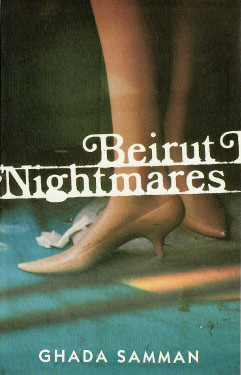
Beirut Nightmares - Ghada Samman


"When one's own homeland has 'emigrated,' leaving behind the values of humanity and social justice, how can any of its citizens be 'stable'?"


Set during the Lebanese Civil War in 1975, Beirut Nightmares is presented as a journal of a woman caught literally in the middle of the war.  Trapped in her apartment building where the war front has come and stalled, no one can escape; snipers are always seemingly present somewhere in the nearby buildings, waiting to shoot anyone who dares to appear outside.  Exactly whose side anyone is on is never clear; whether the author is Christian, Muslim, or something else in also kept hidden. 


The chapters are each presented as a separate nightmare, but are held together by the overall narrative.  While some of the chapters seem extremely real, others are not so obvious as to whether they are real or in the narrator's head.  Early on, she manages to sneak out at night to an adjacent pet shop that has been apparently abandoned but still full of animals in their cages.  She tries to help them by providing food and later escape, but finds that freedom is not so simple for the animals, just as it is not so beneficial for those trapped. 


Later on, the mannequins in stores along the street come to life; at first they are able to enjoy the restaurants along the avenue that have been abandoned by people, but soon they become victims of war just like everyone else.


A harrowing book, the best sections dealt with the narrator and her neighbors in the apartment below her as they slowly descend into panic and chaos.  Choices have to be made, but no one is there to help decide what is the best choice, or if there is a best choice, or if there is any choice.

The Bird Artist - Howard Norman


"I've never been all night anywhere but my own house," I said.

"Now you have."

"I'm going to have to explain it."

"Not to me."

"My mother, I meant.  My father."

"If we walk right up to your house hand in hand, stand right in the kitchen and ask for breakfast together, I bet they'll get the hint."


The bird artist is Fabian Vas, a young man living in Witless Bay, in the far reaches of Newfoundland in the early 20th century.  Fabian has been drawing since he was a young boy and is taking lessons, by correspondence, with a rather critical teacher who is sparse with compliments but who does seem to suggest that Fabian does have talent.  The village of Witless Bay is populated with the odd sorts you might expect in a remote village (think Northern Exposure, which was out at about the time this book was published) by the sea.  Fabian lives with his parents, who seem to mostly endure their marriage rather than enjoy it. Fabian has a puzzling relationship with Margaret Handle, who is a bit older than Fabian, drinks a lot, and is the dominant half of their relationship.  Fabian's passivity is, in fact, the distinguishing feature of his life. 


It seems the unchanging inflexibility of life in Witless Bay is a motivator, primarily for the women in this book, to seek, or inspire, change in the men in their lives.  Both Margaret and Fabian's mother, Alaric (his father is Orkney; odd names are a staple of life here), end up sleeping with the menacing lighthouse keeper Botho August.  Their motivations for doing so are intertwined;  Alaric is dissatisfied with her married life and Margaret is dissatisfied with Fabian, who has, essentially by providing no resistance, agreed with a marriage to his cousin (who he has never met) set up by his parents.  Alaric is not fond of Margaret.


The result of all this is a murder, the breakup of a family,  the beginning of an outlaw legend, and the growing up of Fabian.  And the making of an artist.  This is a decidedly peculiar book;  I have reread it several times, just for sheer enjoyment.  Margaret is an odd, at time frustrating, but always interesting character, as is Orkney, who seems to find himself in a most unconventional way.


Howard Norman has written 2 other books that I have read, The Museum Guard and The Haunting of L. Both take place in early 20th century Canada and include similar themes to The Bird Artist.  While I was less taken with them, they are both excellent.

The Fortress of Solitude - Jonathan Lethem


“What age is a black boy when he learns he's scary?”


Dylan Ebdus grows up in 1970's Brooklyn, one of the only white children in his run down neighborhood.  His father is a reclusive avant-garde artist, working on an film project that will never be completed; his mother Rachel runs off with another man early on in the book.  Inasmuch as that is completely at odds with the way I grew up, I related to Dylan like few other fictional characters I have been acquainted with. 


Lethem throws a ton of pop culture from the 70's and 80's at you over the course of this sprawling book.  Dylan acquires a love of comic books from the man Rachel ends up with.  Besides providing the title of the book, this also leads Dylan to Mingus Rude, the son of a faded, drugged soul singer, who becomes Dylan's best friend growing up.  Though, in a book that is exceptionally keen to the unspoken rules of race relations, there are always qualifiers on their friendship.  Even after Dylan grows out of his dorky white kid early years, he still will be an outsider in his own neighborhood.


There's so much going on in this book - Rachel, though she is gone, remains a presence in Dylan's life for many years through the postcards she sends, always encouraging Dylan.  His father, who, despite living with Dylan and being his sole means of support, is almost a non-existent part of his life, holed up in his room working on his project.  In order to support his son, he eventually accepts some work designing covers of science fiction novels and despite himself, becomes celebrated in that community.  Dylan and Mingus traverse their separate paths through adolescence and their teen years, sometimes together, sometimes apart.  There's always music to bring them together, along with the comic books and tagging.  Dylan also comes into possession of a magic ring.  In a nod to experiencing the other's life, he ring makes Dylan invisible, while it allows Mingus to fly and reach unreachable heights.  Each has their own path to follow, emblematic of the differences in opportunities available to each because of their skin.  Dylan, through the help of a teacher, ends up getting admitted to Stuyvesant High, a academically rigorous high school, and eventually Camden College (the fictional college of a bunch of novels, and which seems to shift novel to novel between Vermont and New Hampshire, and sometimes goes by Hampden, depending on the writer).  Dylan develops a drug habit (its the 80's, so cocaine is the choice), while Mingus remains back in the old neighborhood, and is a dealer for the same. 


As with real life, its the dealer, not the user, who gets in trouble with the law (or is it the black, not the white?), and Dylan carries out a wild attempt to free Mingus from prison that does not go exactly as planned, and mainly reinforces the guilt Dylan feels.


This is a story where I was fascinated with the details, populated with people who care about the same things I did and still do.  While fully integrating into one giant melting pot seems at times impossible, we are much better people for making the attempt to try and break down walls and mix with one another.

Monday, July 11, 2016

The God of Small Things - Arundhati Roy


“There are things that can be forgotten. And things that cannot - that sit on dusty shelves like stuffed birds with baleful, sideways staring eyes.”


I read this not long after it came out in the late 90's. As a dive into international literature, it wasn't particularly easy - my knowledge of India isn't the greatest and a lot of this takes place in the late 1960's and involves issues relevant to India at the time, but not necessarily ones that were international.  It did help to read up on some of the background issues here.  Then again, this novel hits on universal themes.  Failed relationships and the resulting impacts being a big one.  The God of Small Things is a beautiful read; this is Roy's only novel (she is involved in a lot of social activism), but she has a particular voice - there's a dreamy quality to the writing in which I felt I was getting a very impressionistic idea of what was happening.  There is a hard story going on as well, but she prefers to put a veneer over it, possibly due to going back in time.  It's very effective.


This revolves around a relatively well off family in southern India.  Ammu, the daughter who left to escape the tyrannical father, only to get married to an abusive, alcoholic man in Caluctta, has returned home with her twins, Estha and Rahel, who are seven as the story begins. Ammu's father has died, and her brother Chacko has returned from England (after divorcing his British wife) to run the family business (pickles).  Also living there is her aunt, Baby Kochamma, who early in her life had converted to Catholicism in an ill-fated attempt to attract a Catholic priest who had come to their village.


Chacko's ex-wife comes to visit from England with their young daughter Sophie Mol.  With the splintered family now back together, at least physically, events begin to transpire.  Estha is molested in a bathroom while they see a musical.  Ammu enters into a discreet affair with Velutha, a low caste handyman working at their farm, who is adored by both Estha and Rahel.


Eventually the affair is discovered and Estha, Rahel and Sophie run away to tragic consequences that are only compounded by the lingering bitterness in all the family members.  The novel eventually returns to the present day in which the long separated twins reunite, but only after suffering much the same fate as their elders.


Saturday, July 9, 2016

Between the World and Me - Ta-Nehisi Coates


“It is not necessary that you believe that the officer who choked Eric Garner set out that day to destroy a body. All you need to understand is that the officer carries with him the power of the American state and the weight of an American legacy, and they necessitate that of the bodies destroyed every year, some wild and disproportionate number of them will be black.”  


An odd discussion I had with my wife regarding this book.  She felt it lacked a unifying cry to do something together, as a group.  She is correct, that is not included here.  Possibly Mr Coates does not know what that something is.  But I do not think his intention was to include a solution.  I'm not sure he sees one.  The failure of this country to come to terms with its dark side, past and present, is something I consider on a daily basis and have failed to ever come up with my own answer or even a way forward.  I know that in the 50 odd years I have been here, many substantial progresses have been made, yet we still are at the starting line.


As I write this, the news is filled with another black man killed by police while pinned to the ground. I do not know how many others have been killed without such notice since the last time such a story was national news.  Reading this book has not made me more aware of this ongoing destruction, but it has made me more sensitive to the desperation and hopelessness of it.  In light of recent mass murders, the push to have armed citizens seems to be increasing.  Beyond the incredible notion that introducing more weaponry into a society that is already the most heavily armed by a huge factor, there is an hideously ignored racial factor.  The man killed today had a gun in his possession and early indications are that that gun caused his demise.  This is one of the primal fears in a white world: a black man with a gun.  For the police it can represent a way out; he may have used it against us, thus we had to do it.  While I have no doubt that the increased carrying of weapons by citizens will lead to more death, I also have no doubt that armed black men will also become more common victims because they represent a danger.

update 7/9/16.  And it continues.  All Lives Matter is a hypocrisy, a lie.  Just as the sky is blue fails to take in all aspects, the hurried and mumbled all lives matter does likewise.  A bomb in Baghdad a week ago takes the lives of 200...300? we don't even know the number and it barely registers on our conscience.  The killing of 140 in France brings much more concern, the radius involved to touch our lives is that much closer.  50 killed at a gay nightclub in Orlando is even closer, the fear begins to seem real. How much lives matter is a function of identification.  All lives matter seeks to blunt the hardening of our hearts.

Black Lives Matter.  Whether we begin to see that is still just a hope.

Thursday, July 7, 2016

A Wild Sheep Chase - Haruki Murakami


"She’d become so beautiful, it defied understanding. Never had I feasted my eyes on such beauty. It transcended all concepts within the boundaries of my awareness. She was at one with her ears, gliding down the oblique face of time like a protean beam of light.

"You are extraordinary." I said after catching my breath.

"I know." she said. 'These are my ears in their unblocked state."


I get to say that I was reading Murakami before he became so wildly popular in the US.  This was the first book of his that I read, sometime back in the early 90's.  As I recall, I was trying to find Hard Boiled Wonderland at the library, but this was available instead.  But this was good enough to get me hooked.


Describing a Murakami novel is always a challenge - both in terms of plot and exactly how to categorize it.  Japanese magical realism, topped with a love of American detective fiction and fueled with a skepticism of modern Japanese society?  There is something that runs through all his work along those lines.  A Wild Sheep Chase has a more straightforward plot than a lot of his later work, not that it makes a lot of sense.


Our hero, who like many an early Murakami protagonist, is never named.  He's divorced and runs an ad agency with a friend.  Pretty typical Murakami guy - not particularly motivated, mostly just passing through life.  He gets a letter from an old friend, "the Rat," whom he has not seen in years.  It includes a photo that our hero uses in a magazine advertisement as a background.  Because of this he is contacted by associates of "the Boss," a shadowy influential political figure.  It seems that the photo includes a special sheep (identified by a star shaped mark on its back) that has supernatural power and this sheep has provided the Boss his power.  He needs the sheep back to maintain his influence, and possibly his life.  Our hero, along with his girlfriend with the alluring ears (another Murakami special) seek out the Rat.
The physical journey is less important than the mental (metaphysical?) one.  They end up in the mountains of Japan at an abandoned farmhouse with seemingly little to do until an odd man dressed as a sheep turns up.  I generally find it next to impossible to say what a Murakami novel is about, though undeniably there is a lot to be gained.  The closest I can come is to say his books allow you to appreciate your own world in a different perspective than you normally do.  Maybe we all need to allow our ears to be unblocked from time to time.